What Is Dizziness? A Quick Guide To Causes, Symptoms And Treatments

One of the most common complaints our physicians deal with is patients coming in with feelings of dizziness. Most people recognize this disorienting sensation as a warning sign that something’s not quite right in their bodies. Just like how pain warns us that something hurts, dizziness alerts us that something may be out of balance.

Just as there are many solutions to various types of pain, there are also many solutions to why you may feel dizzy. You could be experiencing anything from inner ear problems to low blood pressure, or even something more serious, like dysautonomia. While the feeling of dizziness is not always alarming, diagnosing the causation correctly is crucial to receiving the right type of treatment.

So let’s start with the basics — what actually causes dizziness?

The Word “Dizzy” Can Refer To Countless Conditions

“Dizziness” is an umbrella term that people use to describe a general feeling or sensation, but in the medical world, it needs to be narrowed down. People who experience dizziness often describe the feeling like they are spinning, that they might pass out, or that they may fall over. You may have one or all three of these sensations.

Since “dizziness” is generally used to describe all of these, it’s important to clarify what is actually occurring. We do this by asking exploratory questions around specific feelings and experiences, as well as using cutting-edge diagnostic tools, to help us accurately determine the symptoms before discovering the cause.

So when you say you “feel dizzy,” what do you really mean by that?

Let’s explore the three main categories of dizziness that we may diagnose.

1. Vertigo

Vertigo is the term we use to describe the sensation of spinning, that may be accompanied by nausea or vomiting. It may feel like you yourself are spinning, or that the world around you is spinning. Your body is essentially detecting a false sense of movement. This sensation can last briefly, say seconds or minutes, or up to days at a time. 

A branch of this diagnosis is positional vertigo, occurring when you change position or move your body — we call this benign paroxysmal positional vertigo (BPPV). It is most noticeable when you lie down, sit or stand up from a different position. This is one of the most common forms of vertigo and is usually easy to treat with just a few visits.

What Causes Vertigo?

Vertigo is typically caused by problems in the inner ear, brain or vestibular nerve. Perhaps you previously had an infection, experience frequent migraines or have an autoimmune issue.

Thorough diagnostic testing can help determine where your vertigo is coming from. At Lancaster Brain & Spine, we have a range of cutting-edge diagnostic equipment in-house to help diagnose the root cause of your dizziness.

If you think you’re experiencing vertigo and the sensation disrupts your daily activities or causes you discomfort, we recommend you speak to a medical professional to get a diagnosis and treatment. Book a free 15-minute consultation here. 

2. Lightheadedness

The second category of dizziness is lightheadedness, the sensation of feeling faint or as if you are about to pass out. This is generally caused by a lack of blood flow or oxygen to the brain. For example, if you stand up too quickly, you may feel lightheaded. However, this sensation can be a sign of something more serious or a side effect of an underlying condition. 

What Causes Lightheadedness?

There are numerous underlying conditions and situations where lightheadedness can occur. These include, but are not limited to:

  • Conditions such as dysautonomia and postural orthostatic tachycardia syndrome (POTS)
  • Underlying medical issues like hypoglycemia or anemia
  • People who struggle to regulate their blood pressure and/or heart rate
  • Generalized anxiety disorders
  • Substance use, such as nicotine

If you get lightheaded often, we recommend you see a professional. Book a consultation with us here to see if we can help.

3. Off-balance

The final category of dizziness we diagnose is being off-balance, which refers to being unsteady on your feet or feeling confused due to this unsteadiness. It may present itself as a complete loss of balance, or a feeling like you might fall. 

What causes the “off balance” feeling?

Feeling off-balance is often caused by nerve damage in the lower body or visual problems, sometimes a result of diabetes, chemotherapy or trauma to the nerves. Another condition that can make you feel off-balance is stenosis.

If you regularly feel off-balance and it’s impacting your daily life, seek professional help. You can always book a free 15-minute phone consultation with us by using this simple form.

When Should You Seek Medical Help?

Many people experience one-off occurrences of dizziness that are usually benign and harmless, often due to dehydration, inactivity or motion. However, if you’re experiencing any of the following, we recommend you seek a professional opinion to see if there’s a treatment option available:

  • Chronic/long-term occurrences of dizziness
  • Severe events of dizziness that interfere with day-to-day activities
  • Additional symptoms, such as loss of speech

We understand how frustrating and worrying these symptoms can be — especially when they affect your daily routine. That’s why we offer free telephone consultations that you can request by filling out our quick 5-question form.

How Do You Diagnose The Underlying Cause of Dizziness?

At our Lancaster-based clinic, we’re experts in diagnosing dizziness. That’s why we invested in a variety of cutting-edge diagnostic tools to better understand why you’re experiencing this sensation before prescribing a treatment. 

Some of these tools and technologies include:

  • Videonystagmography — tracking your eye movements to help diagnose vertigo
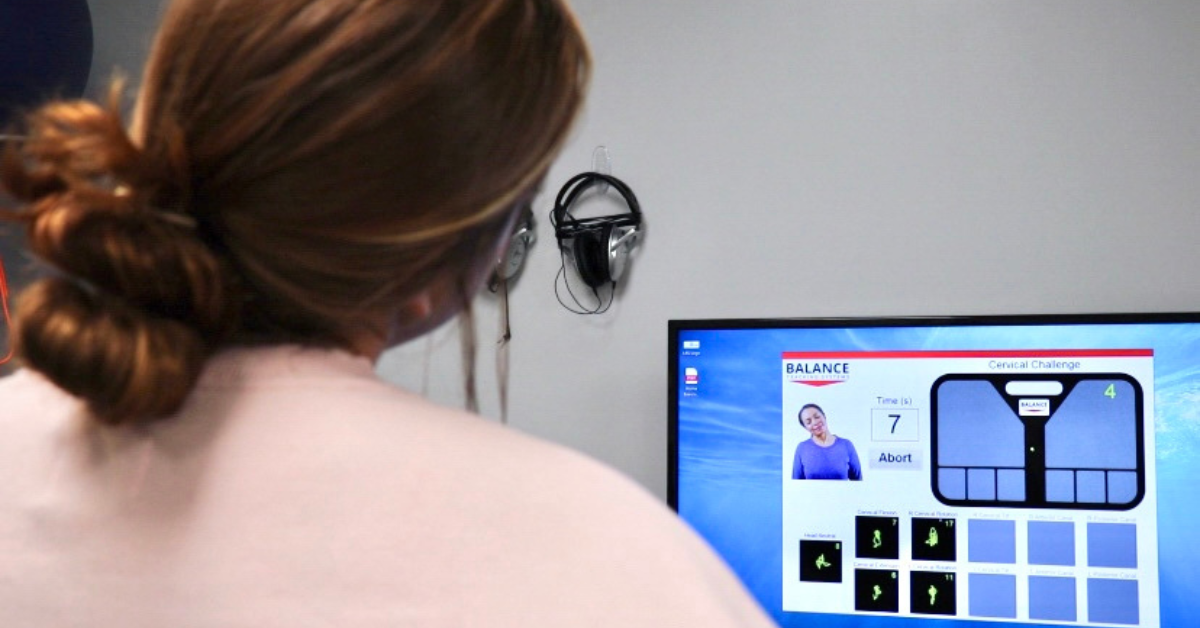
  • Computerized posturography (Btracks) — measuring balance and monitoring center of gravity
  • Tilt table — to measure blood pressure, heart rate and breathing
  • Visual examinations — to measure your walking stance and gait

Using one or a combination of these tools will allow us to properly diagnose your condition and then create a custom treatment plan that suits you and your lifestyle. 

How We Treat Dizziness

As specialists in neurological disorders and dysfunctions, our diagnostic process followed by custom treatment plans has proven to have incredible results. The treatment for dizziness depends on the underlying cause — if you have an inner ear problem, the treatment will be different than someone with low blood pressure.

Therefore, we customize treatment plans based on your diagnosis and lifestyle so we can get you back to living your regular life as soon as possible. 

Looking For Advice On Your Symptoms?

That’s why we offer 15-minute consults, so you can understand your symptoms and what your options are. You can request yours by filling in this quick 5-question form. 

What Is Videonystagmography & How Can It Help Me?

Have you ever heard the saying, ‘The eyes are the window to the soul?’ This phrase usually refers to observing a person’s emotional well-being, however the eyes also play a major role in identifying neurological conditions. At Lancaster Brain & Spine, we use a combination of scientific research and cutting-edge technology to track and treat our patients’ health. Tools and equipment help our professionals identify a range of conditions and underlying issues so we can serve our patients better.

Take videonystagmography, for example. This diagnostic equipment uses goggles positioned across your eyes. And although they look like regular goggles, these are infrared cameras situated inside the equipment that track eye movements. There is also built-in technology that locally saves those recorded eye movements — and this is the most important part for medical professionals, as it helps us to:

  1. Pinpoint irregular or unusual eye movements
  2. Identify exactly when those movements occur
  3. Collate evidence that the eyes are reacting unusually

So having access to this data allows us to better identify symptoms than could be expected with the naked eye. This leads to better detection of underlying conditions or chronic symptoms that may have been previously missed or misdiagnosed. For example, if a patient came in suffering from severe dizziness, videonystagmography allows us to capture exactly when the dizziness is occurring so we can better understand and then treat the underlying problem.

As a diagnostic tool, videonystagmography can accurately capture and record your eye movements even in the dark, which gives us more possibilities to identify and test for, depending on what our patient is experiencing. This advanced technology can track movements faster and more accurately than any person alone, no matter how qualified or experienced they are, resulting in the best possible identification method.

What Symptoms Can Videonystagmography Help Diagnose?

As a diagnostic tool, videonystagmography can help diagnose a wide range of symptoms, including: 

  • Acute or chronic dizziness
  • Concussions
  • Balance
  • Brain injury or dysfunction

Let’s say you come into our clinic because you’re experiencing dizziness. When it comes to a symptom like this, it can be hard to determine exactly when or why the feeling is occurring. By using the detailed videonystagmography data, we can determine the exact point at which the dizziness is occurring, which helps us narrow down the cause — we call this localizing the issue.

We’ll test your symptoms by rotating different parts of your body and measuring your reaction to the various movements in different positions. Some patients find dizziness occurs when they roll over, sit up or lay down, and the videonystagmography tests allow us to verify the sensations with tangible data. By combining a patient’s verbal explanation and physical exam findings with the videonystagmography results, we can create a customized treatment plan to treat your specific symptoms.

What Does The Videonystagmography Process Look Like?

When you come into our Lancaster, PA-based clinic, we get you set up with the videonystagmography equipment. That involves sitting at the appropriate distance (which we would determine) and calibrating the equipment. Next, one of our specialist team members will fit the goggles onto your face to ensure they’re comfortable.

These diagnostic sessions last 30 minutes and typically start by having you look straight ahead in the dark. Your baseline is determined during calibration using visual gaze. We’ll start your test in the dark to look for any spontaneous movements called “nystagmus” that can indicate vestibular disorders or other disorders of central brain processing. This tells us if your eyes are moving as they should be without a fixed target or light interference. 

Then we perform a series of exercises to determine your ability to hold your gaze steady in different eye positions, as well as your ability to track a target and follow quick-moving targets. Additionally, we can observe your eye movements while we put your body and head in different positions that may provoke your dizziness.

Is Videonystagmography At Lancaster Brain & Spine Right For You?

We offer videonystagmography at our clinic as part of our evaluation package or neurological performance package. Not many clinics in the area have this technology, so a lot of patients are referred to us by other neurologists or specialists. 

Typically, videonystagmography is best used to help diagnose a wide range of neurological issues, as explained above. Our team is specially trained to use the videonystagmography diagnostic tool, as well as identify when it’s best to use this tool. So that’s why we always recommend giving us a call so we can discuss this with you over the phone. 

To see if videonystagmography is the best diagnostic tool to identify your neurological condition, contact our experts for a free consultation. These calls are designed to help you understand what might be wrong and if we can support you — and we offer them free of charge to give you peace of mind. Because we’re here to help and serve you so you can get back to living your life as soon as possible.

Accelerate Healing For Neurological Conditions With Our Specialized Intensive Treatment

At Lancaster Brain & Spine, we specialize in the treatment of neurological problems using individualized treatment and advanced diagnostic tools. This includes neurological conditions and disorders like attention-deficit/hyperactivity disorder (ADHD), traumatic brain injuries (TBIs) like concussions, vestibular disorders such as dizziness, vertigo and balance problems, and so much more. 

We also believe that you shouldn’t have to suffer with your neurological condition longer than you have to. That’s why we offer weeklong intensives (that aren’t actually intense) so we can help you get back to living your life as soon as humanly possible.

  • But how do these intensives work? 
  • What does a typical week look like?
  • Are the treatments hard or painful?

We’ll answer all these questions and more while we walk you through the theory, the benefits and the schedule of what an intensive week at Lancaster Brain & Spine looks like.

(Note — There are countless other conditions that could be classified “neurological,” even migraines, so if you don’t see yours listed, contact us and we’ll let you know if we can help!)

Why Neurological Conditions Require Specific, Specialized Treatments (Different Than Other Medical Problems)

Before we explain what a weeklong intensive treatment is, it’s important to understand that neurological problems must be treated differently than muscle-related issues. 

For example, if you strain a muscle, you need to rest and then strengthen that muscle over a long period of time to prevent further injury. You’ll exercise gradually so your body can break the muscle down, rebuild it, break it down, rebuild it — again and again until it’s strong again. (If you’re interested in how we treat musculoskeletal problems, read about laser therapy here or our list of offerings here.)

However, unlike muscles which take time to develop and grow stronger, neurons (which are nerves in the brain) can change and adapt in a fraction of a second. Even right now as you read this, neurons are firing off electrical signals in your brain, which allow you to recognize and understand the words on this page. And it happens instantaneously — you’re not creating brand new neurons, but you’re making the existing connections between neurons stronger. 

The brain’s ability to form and reorganize synaptic connections, especially in response to learning or experiencing, is called neuroplasticity. 

Neuroplasticity can be improved through identifying damaged neurons and stimulating them with activation and fuel — our goal is to improve both of these areas. The key is to provide the appropriate level of activation while maintaining or improving fuel delivery. The fuel that our cells need to function comes from oxygen and glucose.

By using a variety of tools and treatments, we can stimulate neurons so they produce more protein (the building block for tissues) and mitochondria (the powerhouse of the cell that makes the energy). This results in neurons producing its own neurotransmitters to stimulate the other neurons around it (which means we can induce healing, create new neural pathways, and so much more). 

So due to this fact that the brain can change and adapt quickly (much quicker than muscle tissue), we offer an intensive week as a fast-track treatment. But what does this mean, and how do they work? Let’s dive in.

Why Intensive Weeks Work

Standard neurological care can look like two to three sessions a week. However, what we want to do is create the biggest and best recovery in the shortest time frame possible. (We’re also known for offering alternative treatment methods to suit your lifestyle.)

Our weeklong intensive treatment based in Lancaster, PA is designed to compress the amount of care a patient would receive typically over two months into a single week. And despite the name sounding “intense,” the week is actually not very physically or mentally demanding on your body. The treatment is only time intensive, with intensity referring to the frequency of treatments compared to the standard process of recovery. 

We’re also creating better results. With neuroplasticity work, results can sometimes fade over time if the work is not continued or kept up with. Therefore, having an intensive week of treatments followed by at-home training means we’re exercising the brain and activating those neurons again and again, which creates neuroplasticity that, ultimately, sticks. 

What Neurological Conditions Can Be Treated During An Intensive Week?

Typically, we work with patients who have complex, chronic or acute neurological conditions and disorders, such as:

  • Concussions
  • Traumatic brain injuries
  • Dysautonomia post orthostatic hypotension
  • Vestibular balance
  • Dysautonomia
  • Motor disorders
  • And many other chronic neurological problems (please contact us if yours isn’t listed)

What Are The Key Benefits Of An Intensive Week?

While there are many benefits this form of treatment can have on your body and your brain’s functionality, there are two key benefits we focus on:

— Improved neuroplasticity. We’ve seen incredible results from our intensive weeks, with neurological repair and healing occuring in a much shorter time frame.

— Full focus on recovery. As you travel to our clinic for this week of treatments, it removes home-based distractions so you can fully focus on your recovery, stress-free.

What Does An Intensive Week Look Like?

This custom treatment is made up of three phases: Initial consultation, treatment, after-care.

1. Initial Diagnostics

Every intensive week starts with a diagnostic session. This helps us determine your specific circumstances, so we can design a tailored intensive week, specifically aimed at getting you results. We’ll also schedule all of your appointments so you know where you need to be ahead of time that week.

2. Treatment

The intensive week takes place over five business days, generally including three appointments per working day, totalling 15 at our Lancaster, PA clinic. Between each appointment, you’ll have a rest period, where you can choose to use our private designated rest space or book a recommended nearby hotel.

The sessions themselves are tailored to your specific circumstances, as your needs determine the exercises, frequency, timing and duration. When scheduling your week, we also consider the amount of work possible to see optimal results. Our experts closely monitor your bodily reactions, and pause at any sign of fatigue (whether you notice it or we do).

Mid-Week Check-In

Halfway through the week, we will evaluate your progress compared to your initial diagnostic testing. This allows us to see your progress and re-evaluate the remainder of your intensive week before continuing with treatment or changing course of action. 

Final Diagnostics

At the end of the week, we will run a final diagnostic test to see your overall progress.

3. Post-Intensive Week Care

After our time together is complete, a vital part of the intensive week is follow-up care to take place when you go home. We want to ensure you have a thorough understanding of the changes that took place during your intensive week, and what your next steps at home are.

This includes an at-home care plan we’ll walk you through before you leave the clinic so you’re prepared when you head home. We also provide patients with videos of the home exercises they need to continue doing, which you can access online and follow along. We’ll also schedule a follow up phone consultation and email you, so you can ask any questions that may pop up during your recovery. 

To see if an intensive week is the best treatment for your neurological condition, contact our experts for a free consultation. 

What Is Functional Neurology & How Can It Help Patients Like You?

At Lancaster Brain & Spine, we aim to improve your health and lifestyle longterm by exploring alternative approaches and methods. This is what we call functional neurology.

Functional neurology is a field of healthcare that specializes in the evaluation and treatment of neurological conditions or diseases without the use of pharmaceuticals or surgery.

Because we want to get you back to living your life as soon as humanly possible. So who can we help and how does this approach work? Let’s start here.

Who Can Benefit From Functional Neurology

The short answer? Anyone with a neurological condition, disorder or injury. Especially if you want to… 

  • Improve your focus
  • Stand or walk better
  • Have less pain
  • Think more clearly
  • Reduce dizziness
  • Improve at sports

Functional neurology has been proven to be helpful in each of these instances, as well as many others. For example, if you’re struggling with a lack of inhibition, or maybe you’ve noticed a decrease in your ability to control speech or other functions, functional neurology may be the help you’re looking for.

What Does Our Evaluation Process Look Like?

At Lancaster Brain & Spine, we start every patient’s journey with a comprehensive evaluation process. We use both conventional neurological and orthopedic evaluations, as well as state-of-the-art technologies, to identify and understand your issues. This combination of methods provides the best diagnostic tools available to pinpoint dysfunction in the brain and nervous system. 

During the diagnostic exercises, we take into account all aspects of your individual situation. In addition to asking about localized pain or specific symptoms associated with your condition, we also inquire about things like:

  • Are you sleeping enough, and is it good quality sleep?
  • What does your exercise routine look like?
  • What are you eating, and how often?
  • How does your gut feel day-to-day? Does it change?
  • Do you smoke or drink regularly? 

By taking a comprehensive, holistic look at your lifestyle, this helps us understand the pain and concerns you’re currently experiencing, but also any potential factors that may be exacerbating those symptoms. 

Let’s See Functional Neurology In Action

For example, if you’re not sleeping well, we need to focus on that, because the nervous system repairs and remodels while you sleep. This means that if you’re not getting enough shut-eye, your body isn’t getting the chance to heal itself. When patients have sleep issues, it’s often harder for their nervous systems to repair properly, which can lead to more serious health problems.  

We also often see people with sensitivities or allergies to food with inflamed stomach tissues, which can actually lead to neurological inflammation and problems in the brain. These can then cause or worsen other symptoms, such as fatigue or headaches.

So as you can see, there are many factors that can affect how successful your treatment is — whether you drink alcohol or not, what kind of medication you’re taking or not taking, if your blood pressure is too high or too low, the list goes on. When we take each of these elements into account, our team gets a clearer picture of what might be “off” in your body and are able to provide you with a treatment plan to help. 

That’s why our patients’ first appointment length varies person-to person, as we spend as long as necessary getting to the root cause of their issues. In our experience, initial diagnostics can take between 30 minutes and 2 hours, before we even get to treatment. 

Our Personalized Treatment Plans

Once our team of experts has made a diagnosis, we work with you to develop a custom tailored treatment plan. These consist of various methods to treat your specific circumstances. For example, we use a variety of stimulation therapies, eye exercises, brain based therapies and somatosensory stimulation to help patients in a wide range of areas. 

Our integrated approach to rehabilitation based on current scientific research and evidence is designed to promote neuroplasticity. Neuroplasticity is the brain’s ability to reorganize itself by forming new neural connections throughout experiences. This process is essentially the strengthening or wiring of neurological pathways within the brain — and it’s extremely important in the treatment of neurological disorders. 

We’ve seen time and time again that firing off neurological pathways with the right exercise at the right intensity and frequency can increase the number of connections and synapses between neurons and ultimately strengthen existing connections. And this is the reason why we provide weeklong intensives to treat neurological problems.

Can Functional Neurology Help You?

We understand that functional neurology may be an entirely new approach for you, and that you may have never experienced it before. That’s why we offer a complimentary consultation with one of our highly skilled professionals to see if this is something that would be beneficial for you. If you’re interested in an alternative approach to your health, book your free consultation here.